
Why CRM Data Fails: The Hidden Tax of Post-Call Admin
CRM data fails when post-call admin collides with context switching and weak governance—learn to diagnose root causes and quantify the cost.
1) The hidden tax: why post-call admin quietly breaks CRM hygiene

Every sales org wants clean pipeline data, but crm-hygiene usually degrades for mundane reasons: the work happens at the worst moment. Right after a call, reps are switching context from “relationship mode” to “data entry mode,” often on mobile, between meetings, or while juggling Slack pings. That friction turns updates into “later,” and “later” becomes missing stages, stale close dates, and follow-ups that live only in someone’s head.
The second failure is ambiguity. If one rep interprets “Discovery” as “first meeting” while another uses it for “qualified pain + timeline,” your CRM becomes a debate instead of a database. Add inconsistent required fields, duplicate accounts, and unclear activity logging rules, and even motivated reps can’t produce consistent data.
Finally, incentives often reward visible activity over accurate information. Dashboards emphasize calls and emails, not whether opportunity fields are credible for forecasting. The result is a compounding productivity tax: time spent correcting CRM after the fact, plus downstream confusion in sales-operations and revenue-operations workflows.
2) Diagnose the real cause: a four-part framework (process, tooling, governance, management habits)
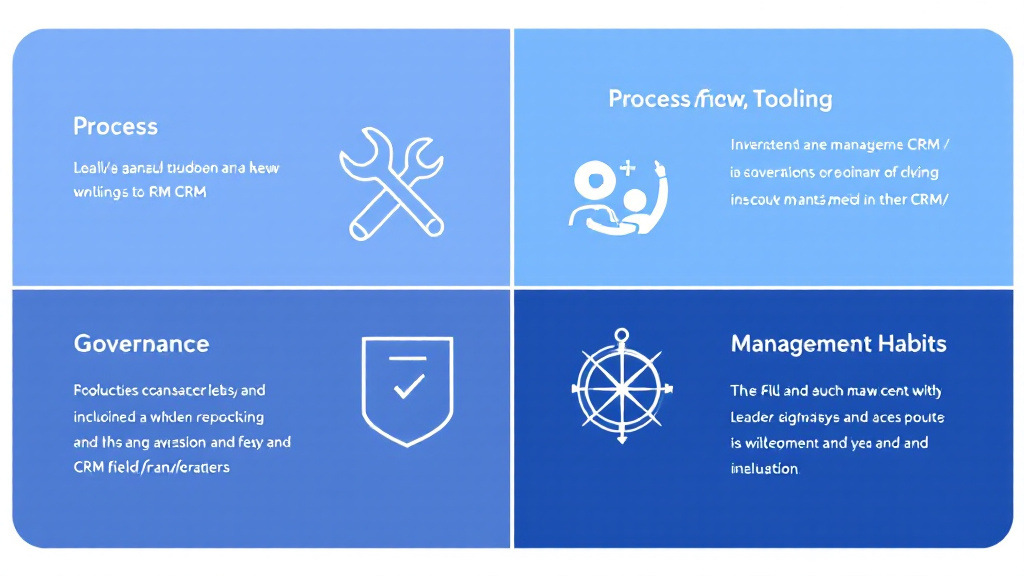
When CRM data is unreliable, teams often blame “rep discipline.” A better approach is to diagnose the failure mode across four levers. Process: Is there a clear moment for capture (immediately after calls) and a short checklist of what must be logged (stage, next step, date, key risk)? If the process is vague, compliance will always be uneven.
Tooling: Are updates fast and mobile-first? Do reps have to hunt for the right account, remember field names, and retype what they just said? High-friction UX is a predictable productivity killer. Governance: Are field definitions documented, required fields aligned with your sales motion, and deduping/entity standards enforced? Without governance, “accuracy” is subjective and revenue-operations reporting becomes patchwork.
Management habits: What gets inspected gets improved. If 1:1s focus only on activity volume, you’ll get activity volume. If managers coach from CRM and hold a consistent bar for next steps and close dates, data quality rises. This framework helps sales-operations pinpoint whether the fix is enablement, system design, or inspection—not nagging.
3) The measurable cost: forecast drift, missed follow-ups, and how voice-first capture reduces it
Bad CRM data isn’t just messy—it’s expensive. In forecasting, small errors compound: a stage that’s one step too optimistic, a close date that’s never updated, or an unlogged security review can create “forecast drift” that whiplashes staffing, spend, and board expectations. Missed follow-ups are the quieter leak: when tasks aren’t created with dates and owners, deals stall and renewals slip, even though the intent was clear in the call.
You can quantify the downstream cost with three checks: (1) Follow-up integrity: percent of calls that produce a dated next step in CRM within 24 hours. (2) Field volatility: how often stage/close date changes in the final two weeks of a quarter (a proxy for late truth). (3) Manager correction time: hours spent reconciling pipeline versus coaching.
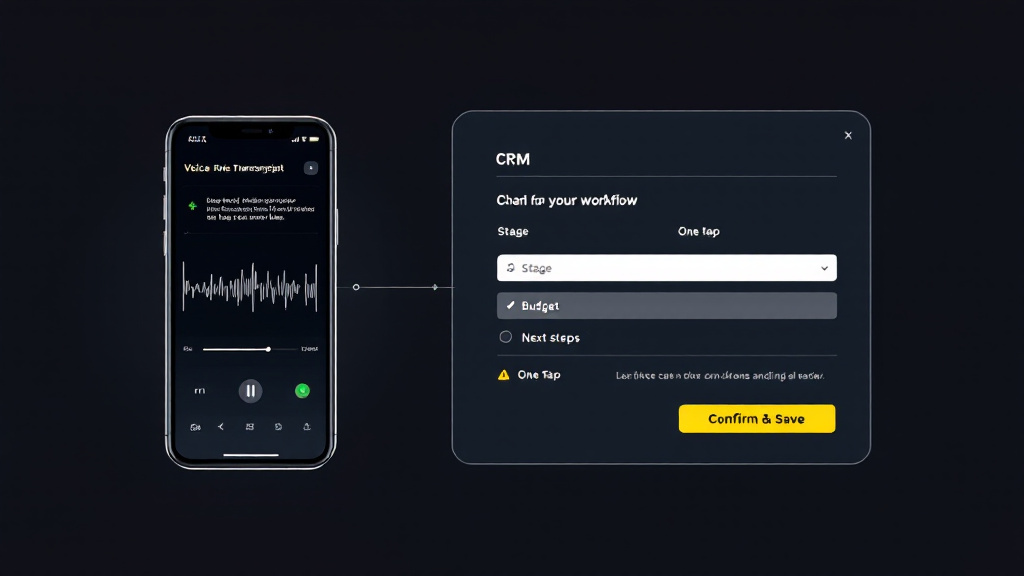
A practical way to improve crm-hygiene is to remove the transcription burden entirely: capture a spoken recap, extract structured entities (stage, objections, budget, next steps), flag low-confidence fields, and write back through native CRM APIs after a quick confirmation. Voice-first workflows like Voice2Field CRM reduce context switching, standardize what gets logged, and help sales-operations and revenue-operations trust the numbers again.